Why doesn't most compliance training change behaviour?
Because it was never actually designed to.
It was designed to be completed. Finished. Marked off a list. Behaviour change was assumed to follow automatically from exposure to information. It doesn't.
People don't fail to follow policies because they haven't read them. They fail because knowing a rule and applying it under pressure, ambiguity, or time pressure are two completely different skills.
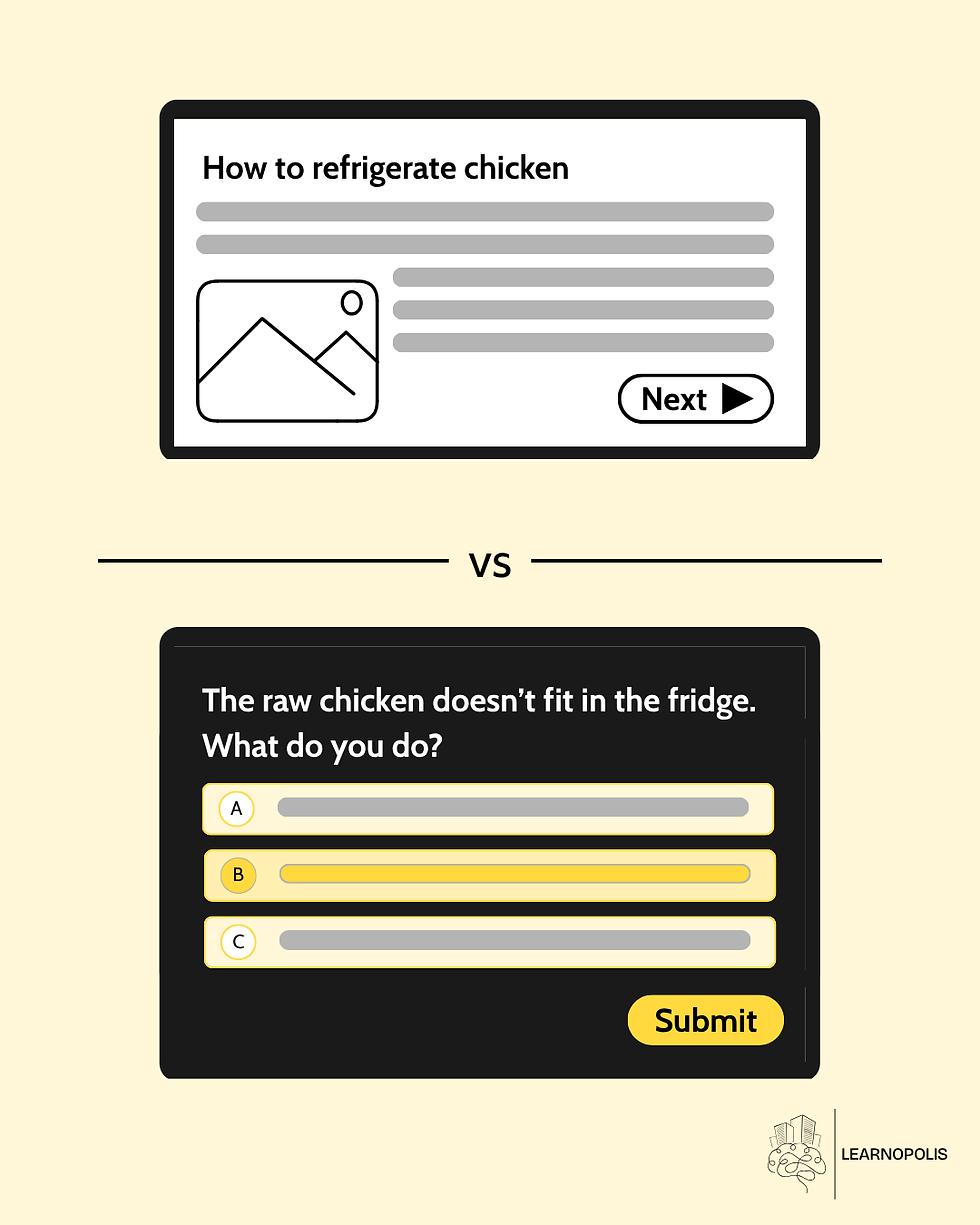
This is the gap scenario-based learning is built to close.
Instead of asking "Do you understand the policy", it asks: "Here's the situation. What do you do"?
A few things that make the difference:
Scenarios pulled from real decisions people face in their roles, not hypothetical extremes
Consequences that unfold from the choice made, not a generic "incorrect, try again"
Enough ambiguity that the "right" answer takes judgement, not memorisation
None of this makes the content longer. Often it makes it shorter because you're not covering every clause, you're building judgement around the ones that matter.
We've seen this shift work across very different sectors - from water infrastructure to renewable energy through to consumer goods. The industry changes. The design principle doesn't: teach the decision, not the document.
Completion tells you someone clicked through. Only behaviour tells you whether it worked.
Jen


Comments