Can an eLearning module actually feel human?
Most people assume the answer is no.
I understand why. Compliance training, in particular, has trained us to expect the opposite: click next, read the slide, tick the box.
But human-centred doesn't mean less digital. It means designing for how people actually think, decide, and behave - even inside a screen.
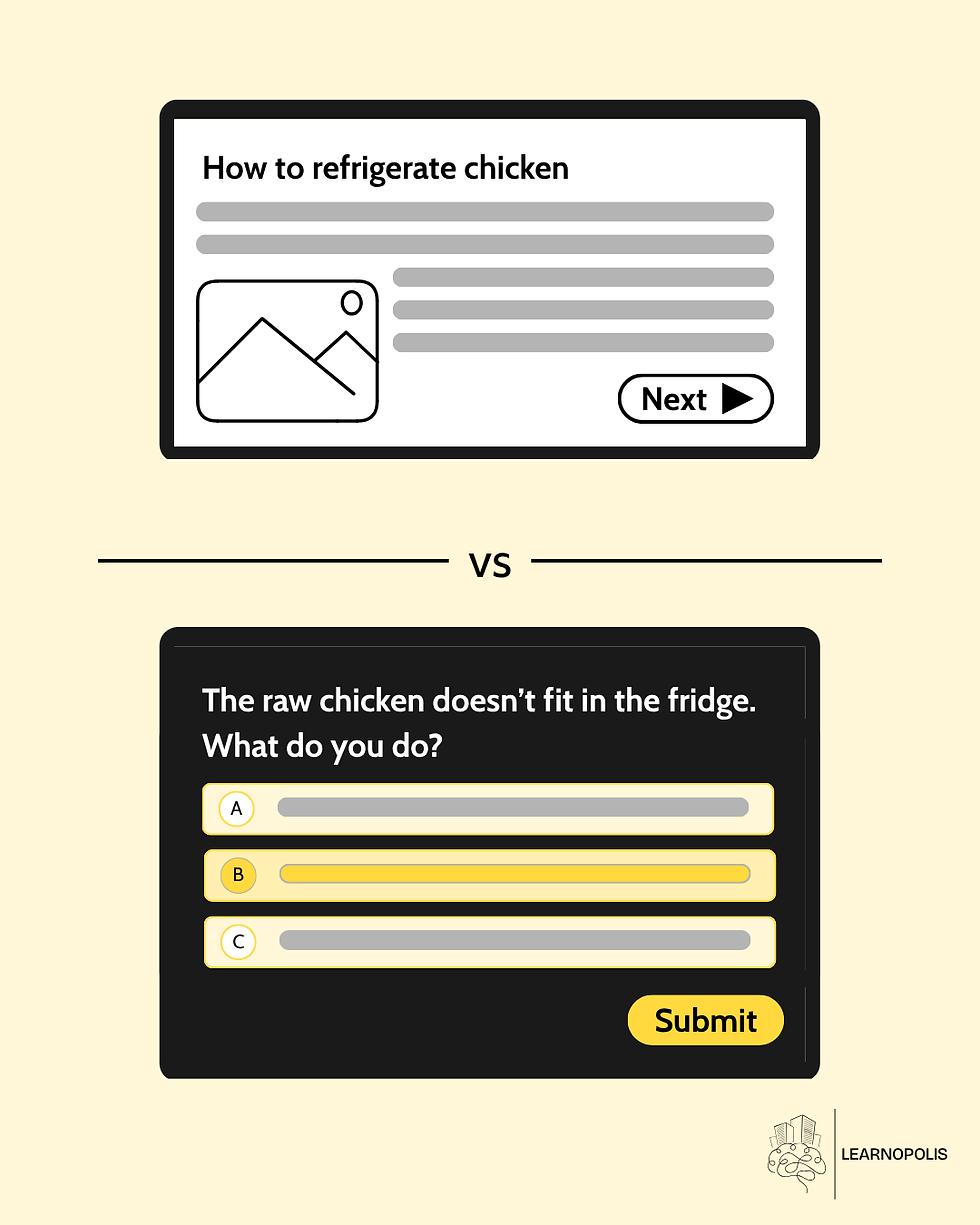
What doesn't work:
Generic scenarios nobody recognises
Feedback that only says "correct" or "incorrect"
Content written for an audience of one - the compliance team
What does:
Situations pulled directly from real decisions people make in their roles
Feedback that acknowledges nuance, not just right and wrong
Language and tone that matches how people actually talk at work
None of this requires more budget. It requires paying attention to the learner before you open the authoring tool.
At Learnopolis, this is the starting point for every custom eLearning solution we build. Before a single screen gets designed, we ask what the learner is actually navigating, not just what the policy says.
Digital doesn't have to mean impersonal. It just has to be designed like someone was thinking about the person on the other end of it.
Jen


Comments